Showing posts with label Bordeaux. Show all posts

Wednesday, April 2, 2008

Wine Blogging Wednesday: French Cab Franc

This month's host for Wine Blogging Wednesday is Gary Vaynerchuk from Wine Library TV and the topic is French Cabernet Franc. I wasn't able to find a wine that was from a majority of this grape but I did find a nice wine. First, a little information about the grape. (Click on the Wine Blogging Wednesday logo to learn more about this monthly blogging event.)

Cabernet Franc (Cab Franc) is one of the six red grapes permitted to be grown in the Boredeaux. Depending on how it's grown, Cab Franc can be both fruitier or more "vegetative" than Cabernet Sauvignon, although lighter in color and tannins. Wines made from 100% Cab Franc tend to have a spicy aroma and plums. The grape is usually blended with either Cabernet Sauvignon or Merlot instead of as a stand-alone wine. It "contributes finesse and a peppery perfume to blends with more robust grapes."

The wine I tried was from the Fronsac region on the "Right bank" of Bordeaux. The Fronsac is located where the Isle River flows into the large Dordogne River. This creates a microclimate that reduces night frosts in spring and cools the summer's heat. The steep slopes in Fronsac help the Bordeaux grape varieties grown here create powerful and complex wines. The soils are clay mixed with limestone.

Fronsac wines are described as being "masculine" and full-bodied. Grapes were grown in this are before the more famous Saint-Emilion just down the river. Merlot grows better here than Cabernet Sauvignon, so like other Right-bank areas, Fronsac is know for it's Merlot blends. Cab Franc is used to add spiciness and enhance the tannins.

The Bordeaux blend I tried for this WBW is from Chateau Villars, a two hundred year old winery in Fronsac. For the past two decades, the owners of Ch. Villars have been modernizing their vineyards and wine making practices. One example of this is that grapes are picked at maximum ripeness, causing the harvest to spread over several weeks. I learned from the book Nobel Rot (the Wine Book Club selection for April) that traditionally grapes were picked to insure maximum harvest before rains came. By waiting for maximum-ripeness, wines with fuller, fruitier flavors are produced.

The Ch. Villars wine I had was 75% Merlot, 18% Cab Franc and 8% Cab Sauvignon. It was 100% barrel-aged for a year in oak barrels, a third of which were brand new. This was a really nice Merlot, though it was different due to the amount of oak used. I had never been able to detect oak in a red wine before this wine, but it was definetly present in the Ch. Villars (Gary would make a comment about the "Oak Monster" I'm sure!) When I first smelled the wine, I could detect cherry and a fresh bread aroma. I couldn't name the fruit I tasted but there without being "fruit forward."

The wine has a medium mouth feel and really nice tannins that don't overpower the fruit or my toungue. Then just before I was about to swallow I could detect the oak. It wasn't excessive, but contributed to make the wine seem fuller. Some may not like it, though. The finish left a pleasant sour cherry taste and lasting tannins. This wine would be really good with food.

Its interesting how the oak effect the middle of my tongue more than any other area of my mouth. The oak also came back again in the finish. I've had other Merlots before, but I'm not sure what part the Cab Franc contributed to this wine to make it different. The oak was more detectable for me. I'll have to read other WBW posts today and try to find some of those wines to get a better feel for what Cab Franc offers. It would be cool to taste a 100% Cab Franc, a 100% Merlot, and then my Ch. Villars blend to see if I could then pick out the different varietals in the blend. I would definitely buy this wine again. The winery website said the wine will be best between 2012 to 2025. It would be nice to try it then to see how the wine deveolops.


Tasting Notes:


2005 Château Villars Fronsac ($19.99)

Color:  Dark purple

Aroma:  Cherry and bread (wonderful Merlot nose)

Taste:  Fruit and oak, medium mouth feel

Finish:  Sour cherry, medium tannins and oak

Wednesday, February 6, 2008

Majority Rules: Merlot

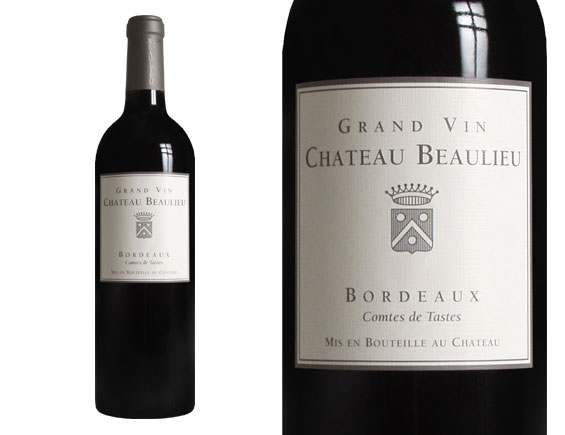
Red blends are some of my favorite types of wine. The combination of grapes yields a flavor that is different than any of the grapes on their own is capable of producing. I really like it, though, when a blend produces a different flavor, but the attributes of one of the grapes is strong enough to recognize. This was the case with the 2001 Comtes de Tastes I drank last night.

This wine was produced by the Bordeaux winery Chateau Beaulieu. In the same way that an off-Broadway play can be easier to get into but just as enjoyable to watch, this "off-Bordeaux" producer makes a great Bordeaux that is just as good as a Bordeaux on either side of the bank, but easy to get into thanks to the lower price. Chateau Beaulie lies 10 miles North of St. Emillion.

I couldn't find the exact ratio, but this wine is made from Merlot, Cab Franc and Cabernet Sauvignon. The flavor of the Merlot is the dominant flavor, but it is transformeed by the presence of the other two grapes into an better wine. This wine goes very well with food. When I tried the wine before eating my dinner last night, it was dry, I could taste the fruit and the tannins were great. Drinking with the wine with food made the wine seem almost sweet. I had the wine with meatballs made out of hamburger, thyme and onion soup mix served over rice and green beans. There may be a better paring for this wine, but they went together well for me.

One more surpirse I got was blueberries. I don't know if blueberries is a normal component people normally detect in a Merlot or a Bordeaux, but I got the definite flavor of blueberries at times. That's a first for my palate! I can't wait to let the wine decant for an hour tonight before drinking it tonight. I hope it changes the flavors even more.

Tasting Notes:


Color: Deep cranberry red

Aroma: Cherry, yeast (is this possibly oak)

Taste: Cherry, blueberry, nice strong tannins

Finish: The tannins linger and seem to build, leaving a sour cherry flavor

Thursday, January 24, 2008

A Cabernet from Bordeaux

I began my search for a Cabernet Sauvignon from outside the US sooner than expected. (I mentioned yesterday that the theme of the next meeting wine tasting group I attend is Cabs from any where but here.) Last night when searching the wine isle at Safeway grocery store I spotted a Cab blend that could be a good candidate, the 2002 Larose-Trintaudon 2000 Cru Bourgeois Haut-Médoc. What a mouth full!

Wines from Bordeaux (located in the South-west of France) are so famous that it's very expensive to buy a top named example. Fortunately, there are many "budget Bordeauxs" to be found that help a wine newbie get in on the fun. The wine I found comes from the left bank of the Bordeaux in the Haut-Médoc appellation. Cabernet-Sauvignon, Merlot, Cabernet-Franc, Malbec, Petit Verdot and Carmenère are the only grapes authorized in the Médoc.

The blend I chose is 65% Cabernet Sauvignon, 30% Merlot and 5% Cab Franc, so it meets the criteria for our Cab tasting. The grapes are grown and made into wine at the beautiful estate of Chateau Larose-Trintaudon. This winery has been around since the 1800's.

When I tried this wine, I followed Dr Debs' decanting instructions recently posted on Good Wine Under $20. (It's a funny that when I visited the winery website, they recommended decanting the wine for an hour!) I'm glad I did because the wine changed and got more interesting after an hour (is a five-year-old Bordeaux considered young?)

I took a small amount of the wine to try before the hour decanting to compare the difference. On the first sniff I took I could smell cherry and something I couldn't place. I decided to really take my time and determine what I was smelling and finally came up with menthol or something like I had smelled in medicine before. After and hour it was more like cherries and rubber bands! When I first tasted the wine, it reminded me more of a Rhone wine with the major grape being Granache, not Syrah. I couldn't really taste the cherry I smelled, but the medium tannins were very pronounced. After decanting, there was more fruit and the tannins blended for a cool mix. I also detected something that reminded me of raw broccli, though not so much the flavor when you are eating it but the after-taste. Speaking of after-taste, the cherry and tannins lingered for a while after each sip.

This wine would be much better with food than by itself. I kept imagining that a medium-rare steak with mild seasoning would go really well. If you've had a Bordeaux blend like this, what foods have you enjoyed it with? This bottle cost $18.99 and I would buy it again if looking for a red blend. It definitely didn't have the fruit forward characteristic I've come to associate with Cabs, but I think I might enjoy a Cab blend like this more with a meal. It's going to be fun searching for Cabs from somewhere else!

Tasting Notes:


Color: Dark cranberry with dark pink edges

Aroma: Cherry and menthol, rubber bands after an hour of decanting

Taste: Slight cherry, with medium tannins, possibly broccli

Body: Medium mouth feel, some heat before decanting

Finish: Cherry and tannins

Tuesday, January 15, 2008

What Would You Do Differently?

People who write wine blogs are great group of people. They are friendly, informative and very helpful when it comes to learning about wine. I’m impressed by the knowledge and willingness to share that I’ve experienced as I visit various wine blogs around the web.

Last year I posted a question to several wine bloggers and wine forums that I thought would help me learn more about wine. I asked,

“If you were able to go back in time to when you were first getting into wine, what would you do differently?”

I thought I could pick up some wisdom if I got a long time wine lover to think about the “mistakes” they made in the beginning or opportunities they missed because they were newbies.

I got a lot of cool advice like:

  • Don’t pay attention to ratings

  • Develop a relationship with a wine merchant in your area

  • Don’t get stuck in a rut, try everything

  • Don’t read too much at first, experience the wines first hand and then learn.


I expected a few emails (which I got) but I was blown away when one blogger included my question in their blog post. It was Tim Elliot of Winecast. Tim does a podcast on various wine topics. On episode 72, he interviewed Bill Wilson who does the blog Wine for Newbies. Tim asked Bill several questions and then they discussed mine. It was cool to hear these two bloggers answer my question! They gave some great answers and I still visit their blogs from time to time to learn more.

Another cool piece of advice I got was about Bordeaux futures. One member of a wine forum (I can’t remember which one) said he wished he had bought Bordeaux futures the year he first got into wine because it was a great year. By the time he became familiar with Bordeaux wines, that vintage was too expensive to buy from wine shops. He recommended buying 2005 futures even if I didn’t know if I liked Bordeaux wines. I took his advice and I have two bottles which I'll receive in June of this year. It isn’t much, but I thought it would be a great way to get my feet wet even though I’m only getting two bottles. I have tried some Bordeaux wines of a different vintage and enjoyed them, so I’m looking forward to getting my own 2005 Bordeaux wines.

I may still be able to take advantage of the wonderful 2005 Bordeaux vintage. There was an article in the Wall Street Journal last Friday on the 2005 Bordeaux, “Looking for Value in a Prized Vintage” by Dorothy Gaiter and John Brecher. Their focus is on affordable 2005 Bordeaux that can be found on market shelves today. It seems the supply is hit or miss and goes pretty quick. If you find a bottle, better pick it up. Good values can be found for between $9 and $15: what a deal!

I’d still like to get answers on my question, so please post a response: If you could go back to when you were first learning about wine what would you do differently?

Click to Watch WLTV

The latest wine library TV

Changing the wine world.